Clicky

Table of Contents

Table of Contents

Get to Know us

Office Acoustics in Singapore: A Guide to Solving Noise Issues

Office Acoustics in Singapore Office Acoustics in Singapore is a big challenge in most modern workspaces. Walk into almost any new office in Singapore, and you’ll likely find an open-plan layout. It’s a design we’ve all come to know—bright, flexible, and built for collaboration. But I’ve seen firsthand the hidden downside that comes with tearing down the walls. That constant buzz of conversations, ringing phones, and tapping keyboards can quickly turn a modern dream office into a zone of distraction.

If you’re noticing your team looks fatigued, or if studies showing that 36% of employees lose an hour of work daily to noise hit a little too close to home, you’re in the right place. The good news is you don’t have to rebuild your office to reclaim peace and productivity.

Solving noise issues in an open-plan office isn’t about finding one magic bullet. It’s about using a smart, layered approach. This guide will walk you through the essential strategies, from simple additions to advanced systems, to create a workspace that sounds as good as it looks.

Why Your Open-Plan Office Can Be So Noisy

Before we look at solutions, it helps to understand the problem. Sound is like a bouncy ball. In an office filled with hard surfaces—glass walls, concrete floors, metal desks—sound waves from a single phone call can bounce around the room, creating echo and making everything feel louder than it is. This is called reverberation.

The goal of office acoustics isn’t to create total silence. Instead, it’s about controlling how sound travels and absorbing that extra, unwanted noise so your team can focus without feeling isolated.

The Core Toolkit: Your First Line of Defense

Think of these as the foundational elements for better office acoustics. They are often the easiest to put in place and can make a huge difference in reducing office reverberation and background chatter.

Sound Absorption: Soaking Up the Noise

The most effective way to stop sound from bouncing around is to give it something soft to land on. Absorption materials trap sound waves, preventing them from reflecting back into the room.

Key Takeaways for Sound Absorption:

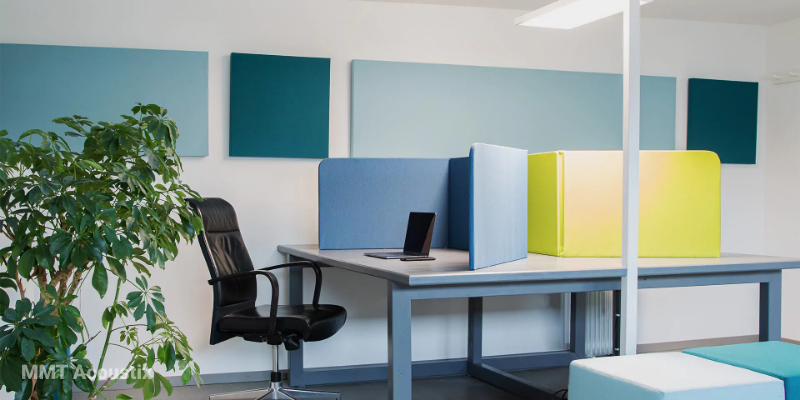
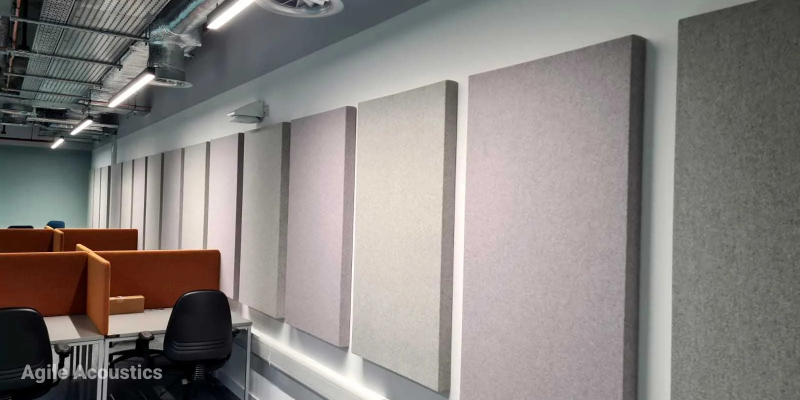
  • Acoustic Panels: These are the workhorses of office acoustics. Installing them on walls or hanging them from the ceiling as baffles or “clouds” can dramatically reduce echo and improve speech clarity. In Singapore, polyester fiber (PET) panels are an excellent choice because they are light, made from sustainable materials, and come in countless colors. For a more refined look, fabric-wrapped panels offer a professional finish with great sound absorption.

  • Soft Furnishings: Don’t underestimate the power of everyday items. Incorporating things like area rugs, thick curtains, and upholstered chairs introduces materials that naturally absorb mid- to high-frequency sounds.

  • Fabric and Felt: Using felt partitions between desks or applying fabric wallcoverings adds another layer of sound-dampening material right where it’s needed most.

Sound Blocking & Zoning: Creating Pockets of Peace

While absorption soaks up sound, blocking stops it from traveling from one area to another. This is key for creating distinct zones in your office for different types of work.

Key Takeaways for Sound Blocking:

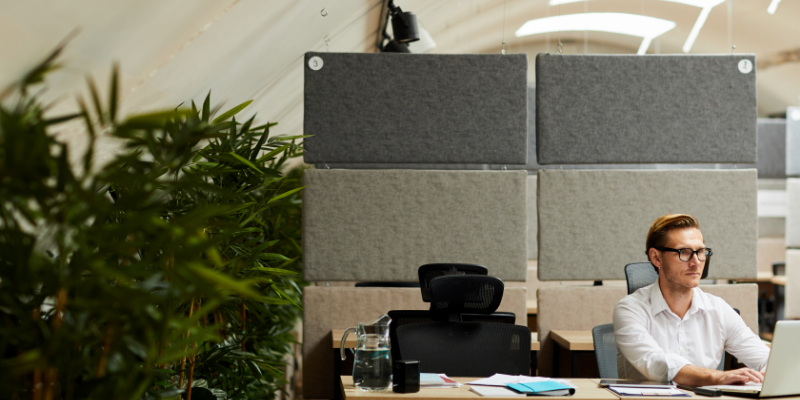
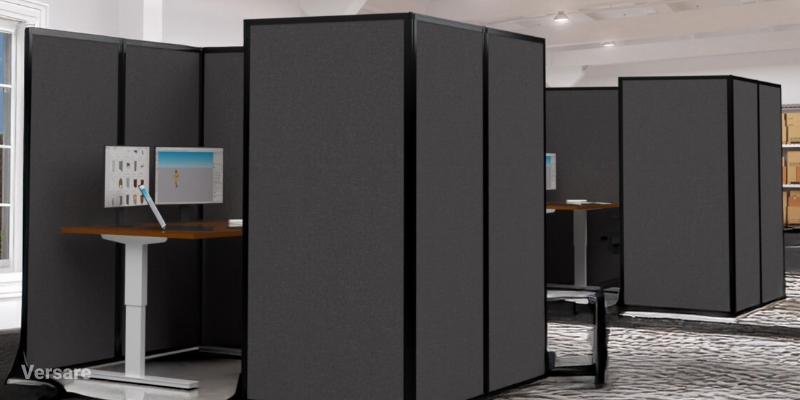
  • Acoustic Partitions and Screens: You can define a collaborative zone from a focus-work area without putting up walls. Freestanding acoustic partitions for office spaces, hanging dividers, or modular panels can create a visual and acoustic separation while still allowing natural light to flow through.

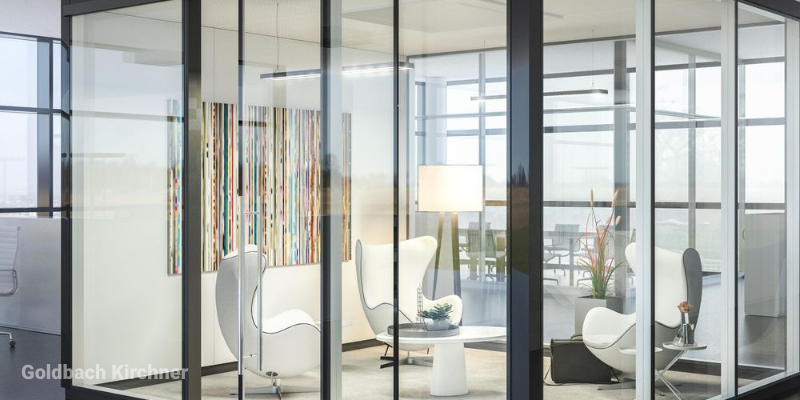
  • Quiet Pods and Phone Booths: For tasks that require deep concentration or private conversations, nothing beats a dedicated space.
  • Quiet pods for open office Singapore workplaces are becoming incredibly popular. These self-contained rooms give employees an escape from the open floor to take a call or finish a report without distractions.

Advanced & Integrated Acoustic Solutions

Once you have the basics covered, you can look at more advanced systems and design-led approaches to further refine your office’s sound environment.

Sound Masking: The Surprising Power of Adding Sound

It sounds counterintuitive, but adding a carefully engineered background sound can actually make an office feel quieter. A sound masking system for offices emits a soft, unstructured sound, similar to airflow.

This sound is specifically tuned to match the frequencies of human speech. It doesn’t stop you from hearing the person next to you, but it makes conversations from across the room fade into the background, improving speech privacy and making distractions less noticeable. Modern smart systems even have adaptive volume control, automatically adjusting the sound level based on how noisy the office is at any given moment.

Strategic Design: Turning Function into a Feature

Good acoustic design doesn’t have to be boring. It can be a core part of your office aesthetic.

  • Branded Acoustics: You can get custom-printed acoustic panels that feature your company logo, brand graphics, or even biophilic designs like a forest scene. This allows you to turn functional sound treatment into a design feature.

  • Isolate Noisy Equipment: That constant hum from printers, scanners, and coffee machines adds to overall sound fatigue. Group these devices in an enclosed pantry or a dedicated utility corner treated with acoustic materials to contain the noise.

The Human Element: Building a Noise-Aware Culture

Even the best acoustic materials can’t solve everything. A big part of managing office noise comes down to people. Creating a noise-aware office culture helps everyone take shared responsibility for the sound environment.

Simple changes can have a big impact. Encourage staff to:

  • Use headsets for phone and video calls.
  • Hold impromptu meetings in designated breakout spaces instead of at their desks.
  • Be mindful of their voice levels in quiet or focus zones.

Putting It All Together for a Quieter Workspace

As you can see, there is no single answer to solving open-plan office noise. A few panels might help a little, but a truly effective strategy combines several of these elements. The best approach is a customized one that considers your office layout, your team’s needs, and your company culture.

By blending absorption, blocking, and maybe even masking, you can create a quieter work environment that reduces distractions and helps everyone do their best work. You’ll not only minimize distractions and increase productivity but also improve your team’s overall well-being.

A well-designed office should empower your people, not get in their way. The sound of your workspace is a critical, though often overlooked, part of that equation.

At Ad-Evo, we believe that purposeful design transforms spaces and enhances lives. We go beyond aesthetics to create environments where form and function evolve together, helping your business and your people thrive.

Plan your next home renovation with us

Explore our services and portfolio to see how we support homeowners at every stage of their renovation journey.

Ready to take the next step? Contact us for a consultation and let’s turn your renovation ideas into a space that feels truly yours, while meeting all of Singapore’s housing requirements.


What is the main cause of noise in open-plan offices?

The main cause is sound reflection, or reverberation. Hard surfaces like glass, concrete, and metal, common in modern offices, cause sound waves from conversations and equipment to bounce around the room, amplifying noise levels.

Yes, they make a significant difference. Acoustic panels are designed to absorb sound waves, which reduces echo and reverberation. This improves speech clarity and makes the entire office feel quieter and more comfortable.

Polyester fiber (PET) panels are a popular option in Singapore because they are lightweight, sustainable, and available in many colors. Fabric-wrapped panels are also common for their professional look and excellent sound absorption.

You can use soft furnishings like area rugs, thick curtains, and upholstered chairs. Felt partitions between desks and fabric wallcoverings are also effective at dampening sound.

You can use acoustic partitions, hanging dividers, or modular screens to define zones for focused work. For true privacy, installing quiet pods or enclosed phone booths gives employees a dedicated space for calls and concentration.

A sound masking system is a technology that emits a low-level, specially tuned background sound. This sound “masks” human speech and other distracting noises, making them less intelligible and therefore less distracting.

Absolutely. Many acoustic solutions can be integrated into your design. For example, custom-printed acoustic panels can display company branding, artwork, or biophilic designs, turning a functional item into a design feature.

Yes. Placing noisy equipment like printers and coffee machines in acoustically treated utility corners or enclosed pantries helps isolate the sound they generate from the main workspace.

A noise-aware culture is an office environment where employees are mindful of the noise they create and take shared responsibility for keeping the space comfortable. This includes using headsets for calls and holding meetings in designated areas.

Rarely. The most effective approach is a holistic one that combines multiple solutions, such as sound absorption (panels, rugs), sound blocking (partitions, pods), and behavioral changes (a noise-aware culture).

The basic philosophy of our studio is to create individual, aesthetically stunning solutions for our customers by lightning-fast development of projects employing unique style and architecture. Even if you don’t have a ready sketch of what you want – we will help you to get the result you dreamed of.

The basic philosophy of our studio is to create individual, aesthetically stunning solutions for our customers by lightning-fast development of projects employing unique style and architecture. Even if you don’t have a ready sketch of what you want – we will help you to get the result you dreamed of.

TESTIMONIALS

What People Say

Let’s Talk About Your Next Project.