


 Rising electricity costs in Singapore are hitting retail and F&B businesses hard. With electricity tariffs tied to volatile oil prices and quarterly adjustments, business owners need predictable ways to cut energy expenses. Smart lighting systems offer a solution that goes beyond simple LED upgrades — delivering measurable cost savings that improve your bottom line.
This analysis breaks down exactly how smart lighting can reduce energy consumption by 35% or more, with real ROI calculations that CFOs and business owners can use to justify the investment.
Singapore’s electricity market structure creates ongoing cost pressures for businesses. Natural gas prices fluctuate quarterly, with tariffs averaging SGD 0.25-0.30 per kWh for commercial users. The services sector — which includes retail and F&B businesses — represents the majority of lighting energy demand in commercial buildings.
Lighting accounts for approximately 8% of total electricity consumption globally, but in retail and F&B spaces, this percentage often runs higher due to extended operating hours and the need for attractive ambiance. A typical 2,000 square foot restaurant might spend SGD 3,000-4,500 annually just on lighting costs under current electricity rates.
These costs compound when businesses rely on outdated lighting technology. Traditional halogen lamps produce only 20 lumens per watt, while compact fluorescent lamps reach around 50 lumens per watt. Modern LED systems achieve 100-150 lumens per watt, with premium options exceeding 200 lumens per watt.
The efficiency gap represents immediate savings opportunities. If lighting technology had remained constant over the past decade, the services sector would consume about 800 terawatt hours more electricity annually — a massive hidden cost that upgraded businesses avoid.
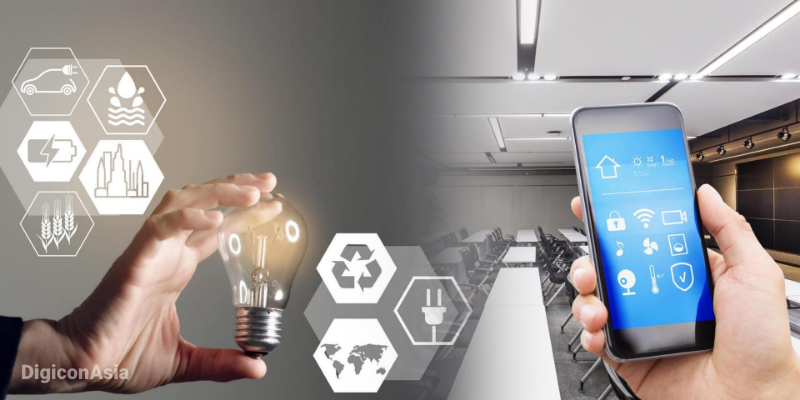
Smart lighting goes beyond switching to LED bulbs. These systems integrate sensors, controllers, and analytics platforms that automatically optimize energy use throughout your business day.
Key components include occupancy sensors that turn lights off in unoccupied areas, daylight sensors that dim artificial lighting when natural light is available, and scheduling systems that match lighting levels to actual business patterns. Zone controls ensure only occupied sections use full lighting, while automated dimming reduces consumption by 10-70% depending on the specific area and time of day.
Modern smart lighting systems consume minimal additional power for connectivity — typically just 0.5-2 watts for standby operation. The control capabilities far outweigh this small energy cost through intelligent optimization that would be impossible to achieve manually.
Integration with building management platforms enables predictive maintenance, reducing service calls by 15-25% and preventing costly failures during peak business hours. Usage analytics help identify additional savings opportunities by showing exactly when and where energy gets consumed.

Let’s examine a typical 1,500 square foot retail space in Singapore to demonstrate real-world ROI calculations.
Current State Analysis:
Annual energy consumption: 40 × 32W × 12 hours × 360 days = 55,296 kWh Current annual lighting cost: 55,296 kWh × SGD 0.27 = SGD 14,930
Smart LED System Upgrade:
Annual consumption after upgrade: 40 × 12W × 12 hours × 360 days × 0.75 = 15,552 kWh New annual lighting cost: 15,552 kWh × SGD 0.27 = SGD 4,199
Energy Savings Breakdown:
Investment Analysis:
This analysis excludes additional benefits like reduced maintenance costs, improved light quality, and potential Green Mark certification incentives that can further improve ROI.

Food and beverage establishments face unique lighting challenges with diverse zones requiring different illumination levels throughout the day. Smart lighting addresses these needs while maximizing energy efficiency.
Consider a 2,500 square foot restaurant with dining area, kitchen prep zones, and storage spaces:
Zone-Based Smart Lighting Strategy:
Energy Impact Analysis: Pre-upgrade consumption: 65 fixtures averaging 45 watts each = 2,925W total load Operating 14 hours daily: 2,925W × 14 hours × 360 days = 14,742 kWh annually Annual cost at SGD 0.27/kWh: SGD 3,980
Post-upgrade with smart LED system:
Financial Results:
The restaurant also qualifies for Singapore’s Energy Efficiency Grant, which provides up to 70% co-funding for SMEs, reducing the net investment to approximately SGD 3,600 and shortening payback to just 1.2 years.

Singapore offers multiple funding programs that significantly improve smart lighting investment returns. Understanding these incentives can reduce upfront costs by 50-70% for qualifying businesses.
The Energy Efficiency Grant (EEG) provides the most accessible funding for small and medium enterprises. Base tier coverage includes up to SGD 30,000 for pre-approved energy-efficient equipment, including LED lighting systems. The 70% co-funding rate means a SGD 15,000 smart lighting project costs just SGD 4,500 out of pocket.
For larger spaces, the Green Mark Incentive Scheme for Existing Buildings 2.0 (GMIS-EB 2.0) offers substantial support. Buildings with at least 5,000m² gross floor area can access grants up to SGD 1.2 million for comprehensive energy retrofits. Smart lighting upgrades contribute to the required energy performance improvements.
The funding structure rewards higher performance levels:
A comprehensive smart lighting retrofit in a qualifying retail mall or large F&B establishment could capture significant grant funding while achieving the energy performance targets.
These programs reflect Singapore’s commitment to green building standards, with targets to achieve Green Mark certification for 80% of building stock by 2030. Early adopters benefit from current incentive availability and position themselves advantageously for future mandatory energy improvement requirements.
Smart lighting implementation requires careful planning to minimize business disruption while maximizing energy savings. Most retail and F&B installations can be completed within 2-4 weeks depending on space complexity.
Phase 1: Assessment and Design (Week 1) Professional energy audits identify current consumption patterns and optimal smart lighting configurations. This includes measuring existing light levels, mapping occupancy patterns, and calculating potential savings for different zones within your space.
Licensed Electrical Workers (LEW) in Singapore must handle any new wiring requirements. Simple fixture replacement typically costs SGD 40-60 per unit, while new lighting points with wiring range from SGD 80-120 per point.
Phase 2: Installation (Weeks 2-3)
Most smart lighting upgrades use existing electrical infrastructure, reducing installation complexity. Modular lighting systems allow component replacement of drivers, optics, and control units, minimizing future maintenance costs.
Installation scheduling can work around business hours for retail spaces, though some F&B establishments prefer complete installation during closure days to avoid disrupting service.
Phase 3: Commissioning and Optimization (Week 4) Smart lighting systems require proper commissioning to achieve projected energy savings. This includes programming occupancy sensors, calibrating daylight controls, and setting up automated schedules that match actual business patterns.
Properly commissioned systems experience 15-25% fewer service calls and achieve the full energy efficiency potential built into the technology.
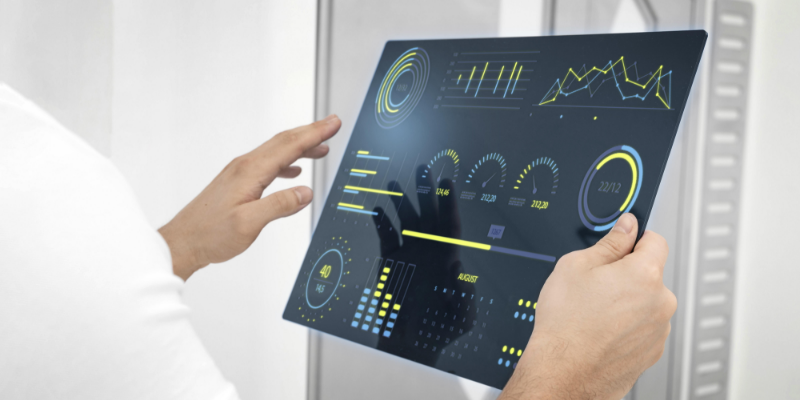
Smart lighting systems provide detailed analytics that help businesses optimize energy use beyond initial installation savings. Half-hourly consumption tracking through Singapore’s smart meter deployment allows precise measurement of lighting system performance.
Key metrics to monitor include:
Businesses can further optimize savings by adjusting automated schedules based on actual usage data. For example, restaurants might discover that prep areas need full lighting later in the morning than initially programmed, allowing additional energy savings through delayed activation.
The analytics capability also supports participation in demand response programs that may become available as Singapore’s electricity market continues evolving toward greater flexibility and renewable integration.
Regular performance reviews ensure systems maintain peak efficiency throughout their operational life. LED technology continues advancing rapidly, with emerging quantum dot LEDs promising 200+ lumens per watt efficiency that may justify future upgrades.

Every retail and F&B space has unique characteristics that affect smart lighting ROI calculations. Factors like operating hours, current fixture types, space layout, and local electricity rates all influence potential savings.
Start by documenting your current lighting inventory and monthly electricity costs. Identify which portions of your bill come from lighting by examining usage patterns during hours when other equipment is minimized.
Consider your business’s growth plans when evaluating smart lighting systems. Spaces expecting expansion benefit from scalable systems that can add zones without replacing central controllers. Businesses planning renovations should coordinate lighting upgrades with other electrical work to minimize total installation costs.
Factor in Singapore’s rising electricity costs and climate goals when projecting long-term savings. As the nation continues transitioning toward cleaner energy sources and implements carbon pricing mechanisms, energy efficiency becomes increasingly valuable as a hedge against cost volatility.
Smart lighting systems typically provide 10-15 years of reliable operation, with component modularity allowing selective upgrades as technology advances. This longevity ensures that today’s efficiency investments continue delivering returns well into the future.
Calculate potential energy savings for your business with our Smart Lighting ROI Calculator to get customized projections based on your specific space requirements and operating patterns.


