


 Singapore’s commercial property landscape demands rigorous adherence to both occupational health and building safety standards. The complexity of navigating OHSAS (Occupational Health and Safety Assessment Series) requirements alongside BCA (Building and Construction Authority) regulations creates significant challenges for property owners and facility managers.
This comprehensive guide addresses the critical intersection of workplace safety and structural compliance in Singapore commercial spaces. With workplace fatalities reaching 36 cases in 2023 according to MOM’s annual report, and BCA imposing strict building maintenance standards across over 5,000 commercial properties, the stakes for proper compliance have never been higher.

Understanding Singapore’s Dual Safety Framework
Singapore operates a sophisticated dual-layer safety system where OHSAS standards govern occupational health and safety management, while BCA regulations control structural integrity and building systems. These frameworks intersect at multiple points, creating compliance requirements that generic contractors often cannot adequately address.
The OHSAS framework provides an international standard for managing occupational health and safety within organizations. It enables companies to identify, control, and decrease workplace hazards while demonstrating commitment to employee well-being and legal compliance. By implementing OHSAS 18001 (now evolved into ISO 45001), organizations create systematic approaches to risk management that apply across all commercial space types.
BCA’s regulatory authority extends beyond basic building codes to encompass accessibility, environmental sustainability, and operational safety. The Building Control Act amendments effective September 2024 introduced the Mandatory Energy Improvement regime, affecting buildings with gross floor areas exceeding 5,000 square meters. This expansion demonstrates Singapore’s commitment to comprehensive building performance standards.
The convergence of these systems requires coordinated compliance strategies. For example, fire safety systems must meet both OHSAS risk management protocols and BCA structural requirements. Emergency evacuation routes must satisfy workplace safety standards while complying with accessibility regulations under the Code on Accessibility in the Built Environment 2019.
OHSAS Implementation for Commercial Spaces
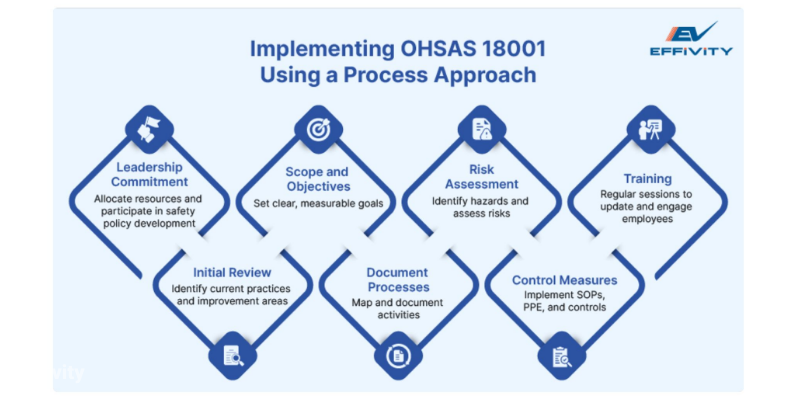
OHSAS implementation follows six core requirements that create systematic workplace safety management. General requirements encompass developing and implementing Occupational Health and Safety Management Systems (OHSMS) structures, including policy formulation, hazard identification, risk assessments, and control implementation.
The occupational health and safety policy establishes clear intent statements and action principles for managing workplace risks. This policy sets overall objectives while ensuring compliance with Singapore’s Workplace Safety and Health Act requirements. Organizations must demonstrate commitment to continuous improvement through regular monitoring and evaluation processes.
Planning requirements necessitate comprehensive hazard identification and risk assessment procedures. Organizations must understand legal requirements, set specific objectives aligned with OH&S policies, and establish measurable targets. This planning phase proves critical for commercial spaces with diverse occupancy types and operational requirements.
Implementation and operation phases establish clear roles, responsibilities, and competency requirements. Effective communication mechanisms must engage all employees through training programs and operational controls. Given Singapore’s penalty structure of up to $50,000 for serious workplace safety offenses resulting in death or serious injury, proper implementation becomes financially critical.
The checking phase involves regular monitoring and measurement against established criteria, including internal audits for compliance verification. Management review processes evaluate OHSMS performance at regular intervals, ensuring top management assesses system suitability and strategic alignment.
Commercial spaces face unique OHSAS challenges including multi-tenant coordination, visitor safety management, maintenance contractor oversight, and emergency response coordination across different business operations. Success requires tailored approaches that address specific occupancy patterns and operational risks.

BCA Compliance Requirements
BCA approval processes follow structured four-step procedures beginning with architectural drawing submission, followed by 2-4 week review periods, written permit approval, and construction commencement authorization. This systematic approach ensures comprehensive evaluation before work begins.
BCA approval becomes mandatory for structural modifications, change of use applications (such as office to restaurant conversions), new or modified fire exits, load-bearing wall installations or removals, mechanical ventilation system changes, toilet or washroom modifications, external facade alterations, and mezzanine floor additions. Understanding these triggers prevents costly compliance violations.
Professional personnel requirements mandate engaging Qualified Persons (QPs) – licensed architects or engineers who oversee and certify projects. BCA-licensed contractors must execute works, while specialist engineers handle MEP (mechanical, electrical, plumbing) systems and structural modifications. Property owners cannot submit applications directly, emphasizing the need for qualified professional engagement.
Submission requirements include Form A building plan applications, architectural drawings at specified scales (1:500 or 1:1000 site plans, floor plans, elevation drawings, cross-sections), calculation sheets, fire safety provisions, accessibility compliance statements, and structural engineer reports. Complete submissions prevent common delays caused by missing documentation.
The BCA fee structure varies by project scope: Minor A&A (Addition and Alteration) works cost $200 base plus $0.50 per square meter, while major A&A works require $400 base plus $1.00 per square meter. Structural modifications command $500 base plus $1.50 per square meter for affected areas, reflecting the complexity of safety evaluations.
Projects exceeding $30,000 contract value require BCA approval through the CORENET e-Submission system. This threshold captures most significant commercial renovations while allowing minor improvements to proceed without formal approval processes.
Fire Safety and Emergency Systems
Fire safety represents the most critical compliance area for commercial fit-outs, with Singapore Civil Defence Force (SCDF) enforcing stringent requirements through the Fire Safety Act and Fire Code. Any works affecting fire protection systems require SCDF submission through licensed fire safety engineers holding appropriate PEB (Professional Engineers Board) registration.
Key fire safety requirements include maintaining fire-rated compartmentation with properly specified walls and doors, implementing fire stopping for all penetrations, establishing smoke barriers in large spaces, installing fire dampers in ductwork systems, calculating exit widths according to occupancy loads, providing emergency lighting with minimum 1 lux illumination levels, ensuring exit signage compliance, and maintaining travel distance limits.
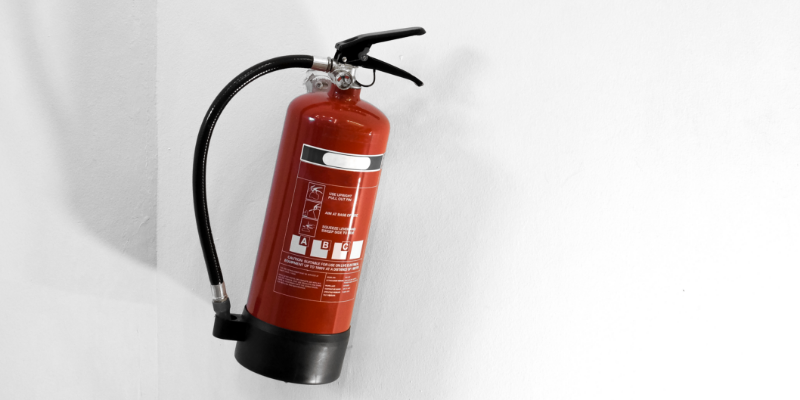
Fire extinguisher placement must ensure maximum 15-meter travel distances from any point within commercial spaces. This requirement often necessitates strategic placement planning during initial design phases to avoid costly retrofitting. Emergency lighting systems require backup power provisions capable of maintaining illumination for minimum specified durations during power outages.
SCDF reviews typically require 10-14 working days for standard submissions, with final inspections mandatory before Temporary Occupation Permit (TOP) or Certificate of Statutory Completion (CSC) issuance. Rectifying fire safety violations discovered during final inspection creates costly delays of 2-4 weeks and potential penalties up to $20,000 for less serious offenses, or $50,000 for serious violations.
Exit path maintenance requires minimum 1,200mm clear widths throughout egress routes, with level landings at doorways and compliant door opening forces. These requirements often conflict with space utilization goals, requiring careful design balance between safety compliance and operational efficiency.
Fire compartmentation becomes particularly complex in open-plan commercial spaces where architectural design preferences favor continuous spaces. Achieving code compliance while maintaining design intent requires specialist fire engineering expertise and close coordination between architectural and fire safety consultants.

Structural and Load Management
Structural integrity requirements prevent commercial fit-outs from compromising building safety or exceeding design load capacities. Structural engineering review becomes mandatory for raised floor systems exceeding 150mm height, heavy equipment installations over 200kg, and any alterations to concrete slabs or load-bearing elements.
Most Grade A office buildings provide maximum superimposed loads typically ranging from 2.4-3.0 kN/m² for general office areas, 5.0-7.5 kN/m² for storage and filing areas, and 7.5-10.0 kN/m² for equipment rooms. Understanding these limitations during planning prevents costly modifications during construction phases.
Exceeding structural load limits requires strengthening measures that substantially increase project costs by $200-400 per square meter. These costs often prove prohibitive, making early load assessment critical for project feasibility. Dense filing systems, server rooms, and specialized equipment installations frequently challenge standard load allowances.
Foundation impact assessments become necessary when structural modifications affect building stability or load distribution patterns. Window and door modifications require professional evaluation to ensure structural adequacy, particularly in curtain wall systems where structural and weatherproofing functions interconnect.
Waterproofing requirements accompany most structural modifications, ensuring building envelope integrity remains intact. Thermal performance standards and wind load considerations add complexity to facade modifications, requiring specialized engineering analysis for compliance verification.
Temporary works approval may be required for construction activities that temporarily alter structural load paths or building stability. This requirement particularly affects renovation projects in occupied buildings where temporary supports become necessary during construction phases.

Documentation and Approval Processes
Comprehensive documentation forms the backbone of successful compliance management. BCA submission timelines typically span 2-3 weeks for simple projects and 4-6 weeks for complex modifications. Understanding these timelines enables proper project scheduling and prevents costly delays.
Week-by-week approval processes follow predictable patterns: Week 1 involves complete submission preparation and initial BCA review commencement, Weeks 2-4 encompass technical assessment periods, and Weeks 4-5 focus on approval issuance or amendment requests. Complex projects may extend these timelines based on technical complexity and coordination requirements.
Common delay factors include incomplete drawings missing critical details or dimensions, non-compliance issues requiring redesign, missing structural or MEP calculations, and absent QP (Qualified Person) endorsements. Preventing these delays requires thorough preparation and professional oversight throughout submission preparation.
Amendment submissions cost $100 each, creating financial incentives for complete initial submissions. Multiple amendment cycles can significantly impact project budgets and timelines, emphasizing the value of comprehensive initial preparation.
Professional engineer certification requirements apply to structural modifications, MEP system changes, and specialized installations. These certifications carry professional liability implications, ensuring qualified oversight throughout design and construction phases.
Record-keeping requirements extend beyond initial approvals to encompass construction documentation, testing records, commissioning reports, and maintenance documentation. These records prove essential for future modifications, insurance claims, and compliance audits.

Common Compliance Pitfalls and Solutions
Fire safety oversights represent the most frequent compliance failures, particularly inadequate fire compartmentation and insufficient exit provisions. These issues often stem from design-phase coordination failures between architectural intent and fire engineering requirements. Solutions involve early specialist engagement and integrated design development processes.
Accessibility gaps frequently emerge during construction phases when universal design features receive insufficient attention during planning. Missing accessibility provisions require costly retrofitting and project delays. Comprehensive accessibility audits during design phases prevent these expensive corrections.
Structural concerns typically involve unauthorized removal of load-bearing elements or inadequate assessment of load capacity impacts. These issues can compromise building safety and void insurance coverage. Professional structural engineering involvement from project inception prevents these critical failures.
MEP non-compliance often involves inadequate ventilation provisions or electrical safety violations. Singapore’s Code of Practice for Indoor Air Quality (SS 554) establishes minimum standards including carbon dioxide levels not exceeding 1,000 ppm and formaldehyde concentrations below 0.1 mg/m³. Achieving compliance requires systematic MEP design and commissioning processes.
Stop-work orders, fines, and demolition requirements represent severe consequences of non-compliance. Unauthorized works can result in complete project halts and expensive corrective measures. Prevention requires comprehensive compliance planning and professional oversight throughout all project phases.
Professional coordination challenges often arise when multiple consultants fail to integrate their specialized requirements effectively. Solutions involve appointing lead consultants with comprehensive compliance experience and implementing structured coordination protocols throughout design and construction phases.
The complexity of Singapore’s commercial compliance landscape demands specialized expertise that extends far beyond general contracting capabilities. Success requires systematic integration of OHSAS workplace safety management with BCA building compliance requirements, creating comprehensive frameworks that protect occupants while meeting regulatory obligations.
Professional compliance management becomes increasingly critical as Singapore continues expanding its regulatory requirements through initiatives like the Mandatory Energy Improvement regime and enhanced workplace safety enforcement. Organizations that master these complex requirements position themselves for sustainable success in Singapore’s demanding commercial property market.
Schedule a free OHSAS and BCA compliance assessment to identify structural and occupational safety gaps in your commercial space


